In 2025, SERP real estate is the new digital battleground. With Google’s continuous scroll, AI-generated overviews, and expanding result types, earning visibility is no longer just about ranking first, it’s about owning every available inch of the search results page.
For digital marketers, SEO specialists, and content strategists, mastering SERP optimization means understanding how to appear across multiple entry points featured snippets, People Also Ask, image packs, video carousels, and even AI-generated summaries. As users increasingly consume answers directly within the SERP, visibility now equals discoverability.
Let’s break down how the 2025 search landscape has evolved and what you can do to dominate it.
The 2025 SERP Landscape
The search results page has transformed into a hybrid of organic, AI, and multimedia touchpoints. Here’s what’s changed:
1. AI Overviews and Generative Results
Google’s AI Overviews now synthesize web content into concise, conversational summaries. Websites that feed clean, structured, and context-rich data are cited directly within these overviews. For brands, this means optimizing for AI SERP trends 2025 not just keywords, but clarity, depth, and data markup.
2. Perspectives and People-First Panels
The “Perspectives” feature integrates opinions from Reddit, YouTube, and TikTok, showing how authority is shifting from static web pages to authentic creators. This broadens search result visibility beyond traditional blue links, emphasizing human-driven credibility and engagement signals.
3. The Rise of Zero-Click and No-Scroll
Users now find what they need without leaving the SERP, whether through featured snippet optimization, instant FAQs, or visual carousels. For brands, visibility in these spaces is as critical as the #1 ranking ever was.
4. Multi-Platform Search Behavior
Searchers bounce between Google, TikTok, Reddit, and AI tools like Perplexity or ChatGPT.
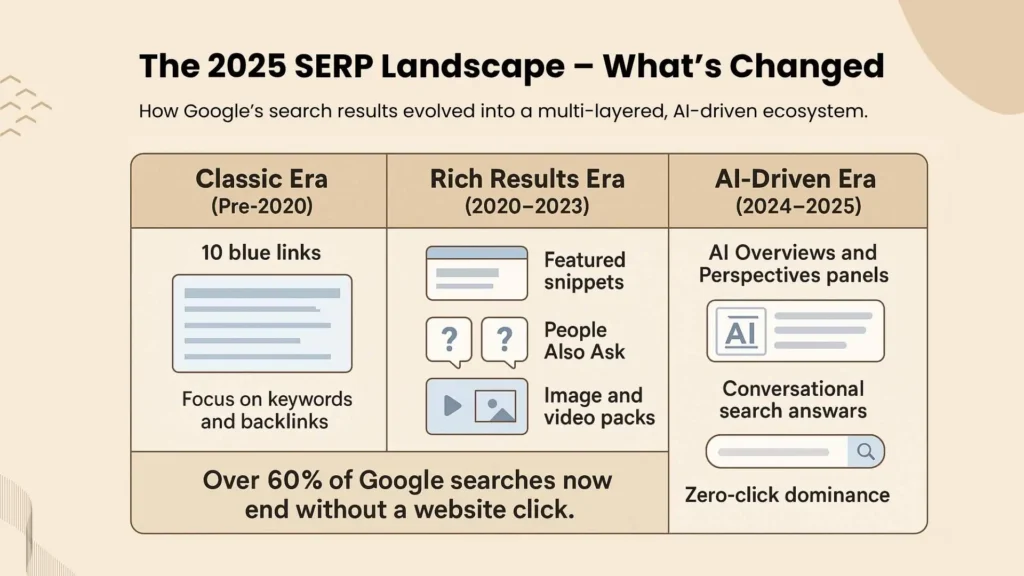
The takeaway: search engine optimization services now require omnichannel understanding your SEO content must be adaptable across formats and intent types.
Strategies to Claim SERP Space
Owning SERP real estate in 2025 requires blending creativity with technical precision. Here’s a breakdown of high-impact strategies:
1. Optimize for AI-Driven Results
AI doesn’t “rank” results, it curates them. To make the cut:
- Answer questions directly using structured subheadings, summaries, and FAQs.
- Implement comprehensive schema markup (FAQ, Product, LocalBusiness, Review, and Article). This increases eligibility for AI citations, featured snippets, and knowledge panels.
- Add entity-based SEO strategies for SGE (Search Generative Experience). Reference key entities (brands, locations, people) consistently so AI can easily associate your pages with topics.
- Use natural, conversational tone and contextually rich phrasing that AI systems prefer.
Example: A SaaS company structured product comparison tables using schema and was cited in Google’s AI Overviews for multiple transactional keywords boosting CTR by 32%.
2. Diversify Content Formats
Search engines now reward media-rich storytelling. Beyond long-form blogs, you need content designed for multiple result types:
- Videos for carousels and Perspectives panels (how-to guides, explainers, customer testimonials).
- Images optimized with descriptive file names, captions, and structured data for image pack inclusion.
- Q&A sections that target People Also Ask queries.
- Interactive elements like calculators, visual tools, or 3D previews that increase on-page engagement.
By diversifying formats, your content becomes visible in multiple SERP areas simultaneously maximizing search result visibility across organic and AI sections.
3. Technical and On-Page Excellence
Strong technical SEO remains the foundation of visibility. Here’s the 2025 checklist:
- Track Core Web Vitals to ensure top performance (especially for mobile-first indexing).
- Keep clean and updated XML sitemaps.
- Use logical content hierarchy (H1 > H2 > H3) with keyword-focused headings.
- Fix broken links, orphan pages, and indexing errors that can block your presence in rich results.
- Ensure proper canonicalization to prevent duplicate confusion in AI-generated results.
Brands that consistently refine their technical base often see exponential gains when Google introduces new SERP features.
4. EEAT, Brand Authority, and Engagement
Google’s focus on Experience, Expertise, Authority, and Trust (EEAT) has deepened. The algorithm favors creators and companies that demonstrate credibility across the web.
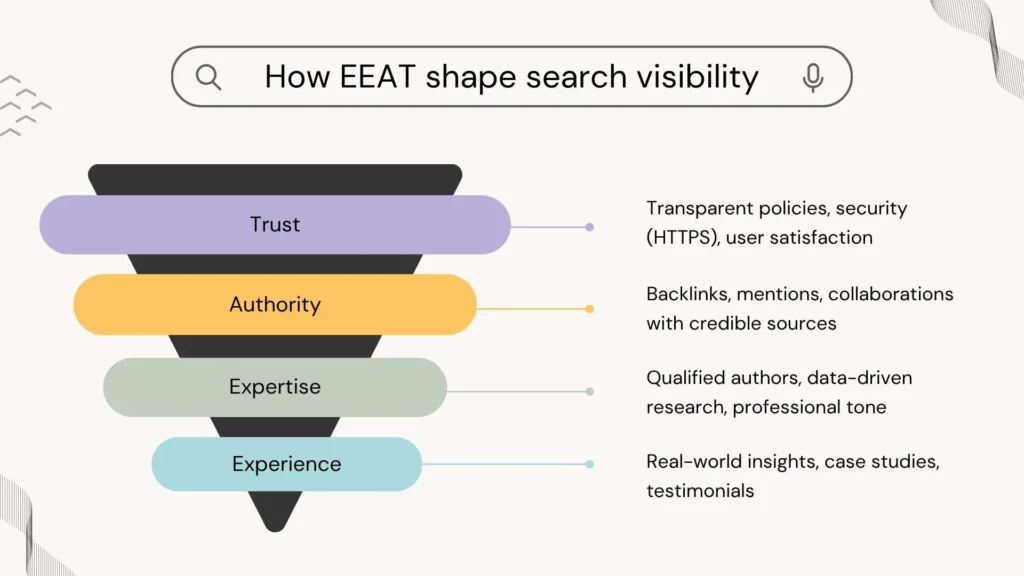
To strengthen EEAT:
- Publish bylined content with expert credentials.
- Feature reviews and testimonials that validate real-world impact.
- Earn consistent brand mentions from authoritative domains.
- Encouraging audience engagement comments, shares, and discussions now signal authenticity.
When EEAT aligns with solid seo marketing, your content is more likely to appear in AI summaries, knowledge panels, and “Perspectives” listings.
5. Local and Intent-Driven Optimization
Local visibility remains one of the most valuable forms of SERP real estate. The key is intent mapping:
- Informational queries → target featured snippet optimization and PAA results.
- Transactional queries → focus on structured data for reviews and pricing to trigger product-rich results.
- Navigational/local queries → claim Google Business Profiles, optimize NAP data, and build local backlinks to rank in map packs.
Example: A regional fitness chain integrated geotagged videos and schema markup for class schedules leading to top placement in local packs and video carousels for “gyms near me” searches.
Industry Insights and Case Studies
Let’s look at how forward-thinking brands are adapting:
- AI + Schema Boosts Real Estate Visibility: A property listing site adopted semantic markup and entity tagging. Result: 80% growth in organic traffic as their listings began appearing in AI Overviews and local knowledge panels.
- Programmatic SEO for Scale: A hospitality platform used automation to generate city-based landing pages, dominating “best hotels in [city]” searches with localized schema and multimedia content.
- Knowledge Panel Takeover: A fintech startup improved brand recognition by feeding consistent data to Google’s Knowledge Graph, earning a branded Knowledge Panel within months.
These examples prove that seo agency efforts now go far beyond link-building, they’re about feeding search systems with structured, trusted, and engaging data.
SERP Audit and Optimization Checklist
Use this quick framework to run your own SERP optimization audit:
- Inventory Your SERP Presence – Identify where your brand appears: snippets, Knowledge Panels, images, videos, PAA, or AI summaries.
- Verify Schema Coverage – Use tools like Google’s Rich Results Test to confirm markup validity.
- Diversify and Align Content – Ensure you’re targeting multiple result types with the right formats.
- Check Technical Health – Audit Core Web Vitals, mobile responsiveness, and indexation.
- Review EEAT Signals – Highlight author credentials, update About pages, and gather credible backlinks.
- Track and Adapt- Monitor how new AI SERP trends 2025 impact your rankings and adjust monthly.
By repeating this audit quarterly, brands can stay ahead of SERP changes and uncover new opportunities before competitors.
Conclusion
The competition for SERP real estate is fiercer than ever, but so are the tools and insights at your disposal.
Run a full SERP audit for your website today. Identify where you appear, where you’re missing, and how to reclaim the digital shelf. Or consult with an experienced seo agency that specializes in search engine optimization services to maximize every opportunity from featured snippet optimization to AI-driven discovery.
Owning the modern SERP isn’t about luck, it’s about strategy, structure, and smart execution. Start optimizing your space before someone else does.
FAQ’s
SERP real estate refers to the total space your brand occupies on a search results page. With AI summaries and zero-click results dominating 2025, visibility across multiple result types is essential for brand discovery and traffic growth.
Google’s AI Overviews curate answers using structured, authoritative sources. Brands that use schema markup, clear formatting, and expert-backed content are more likely to appear in these AI summaries.
Key AI SERP trends 2025 include AI Overviews, Perspectives panels, entity-based ranking, and conversational search results. Adapting content for AI interpretation is now a must-have skill.
Focus on featured snippet optimization, strong EEAT signals, structured data, and multimedia content. Combine seo marketing and technical excellence to capture multiple result types.
By optimizing for map packs, local reviews, and location-based schema, businesses can dominate local search real estate and attract nearby customers through highly visible listings.
Every quarter. Search algorithms evolve quickly, and regular audits help ensure your content, schema, and seo services remain aligned with the latest SERP updates.