Here’s the thing.
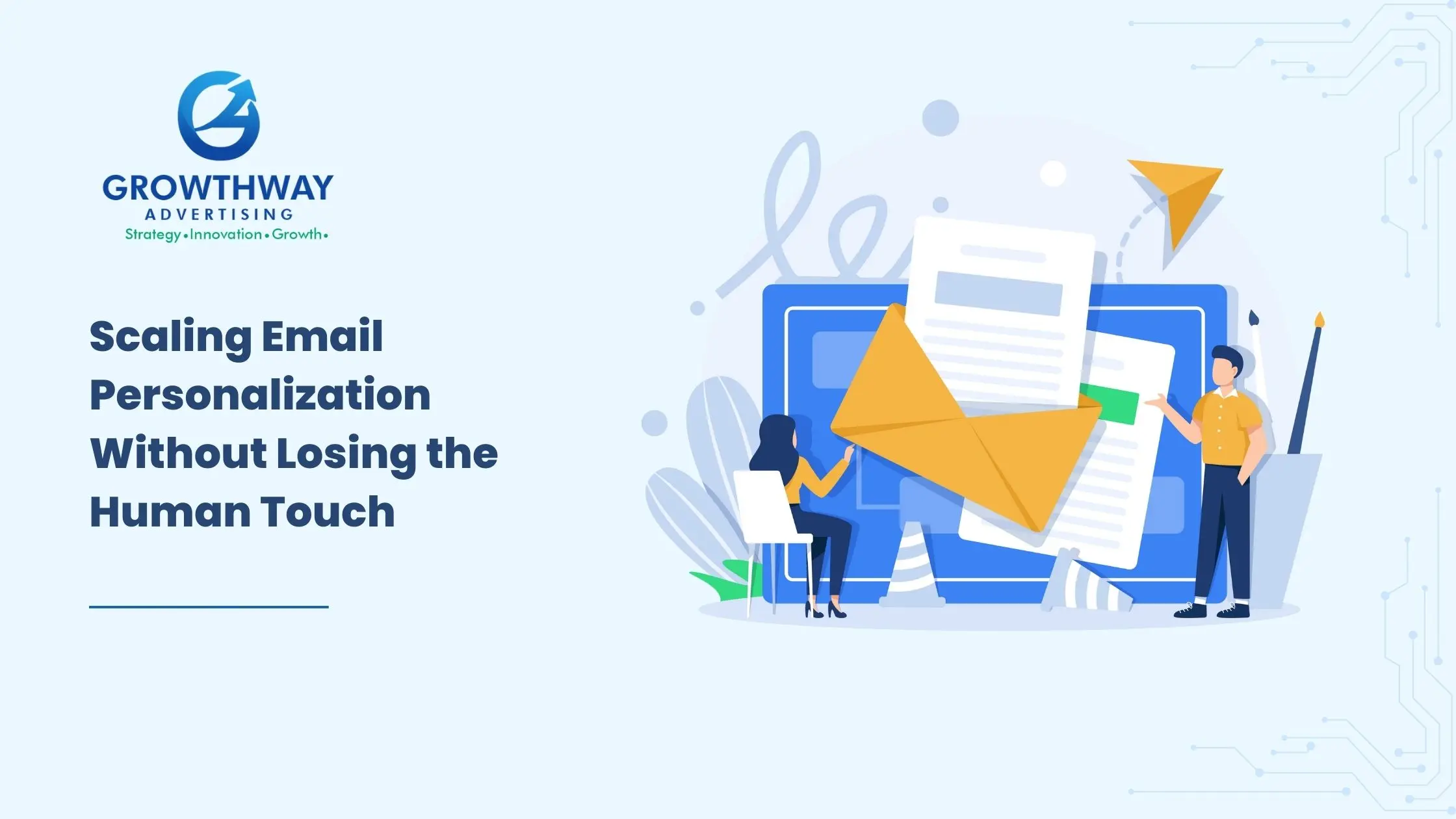
Most brands aren’t struggling with email personalization because they lack tools. They’re struggling because as personalization scales, emails start sounding automated, predictable, and frankly less human.
This is exactly what people are searching for when they ask how to scale personalization without losing trust, warmth, and relevance.
Let’s break it down properly.
Why Scaling Email Personalization Feels Risky
At small volumes, personalization is easy. You know your audience, you write with context, and every email feels intentional.
Once lists grow, things change.
- Messages get templated
- Personalization turns into name tokens and product blocks
- Automation replaces judgment
The result is emails that are technically personalized but emotionally flat.
This is where personalized email marketing either becomes a growth engine or a churn driver. The challenge isn’t automation. The challenge is scaling decision-making while keeping the message human.
What Most Email Personalization Content Gets Right (and Where It Stops)
Most guidance covers the basics well:
- Dynamic fields
- Segmentation
- Trigger-based emails
- Automation workflows
That foundation matters. But it stops short of answering the real question people ask silently:
“How do I personalize at scale without sounding like a machine wrote it?”
To answer that, you need to rethink how personalization is structured, not just executed.
The Shift From Static Segments to Living Context
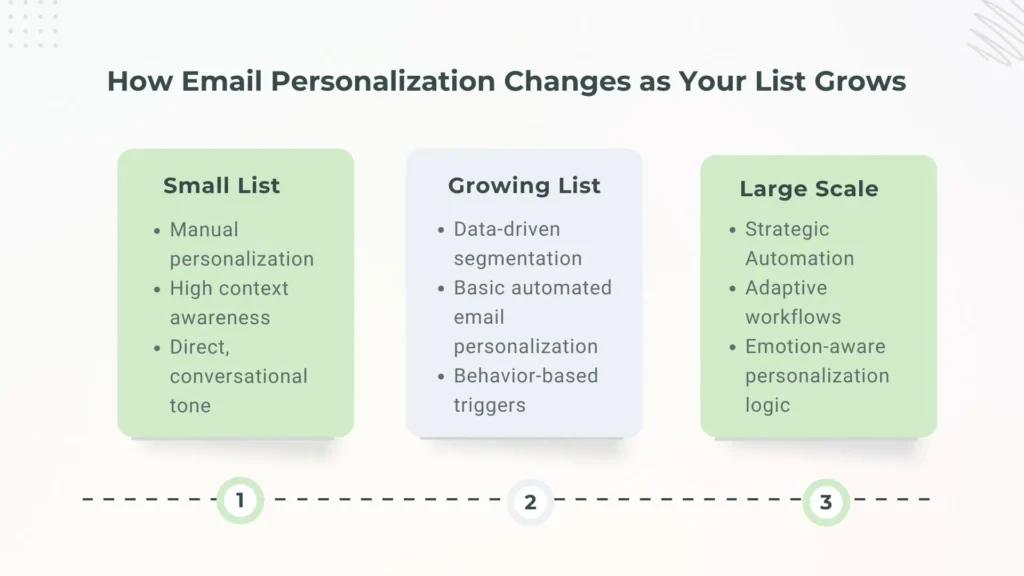
Traditional segmentation groups users based on who they are. Modern personalization focuses on what they’re doing right now. That’s where data-driven segmentation changes the game. Instead of static lists like:
- Age
- Location
- Industry
You layer behavior:
- Pages viewed
- Purchase patterns
- Engagement frequency
- Time gaps between actions
This opens the door to behavioral email personalization that feels timely instead of scripted. When someone receives an email that reacts to their behavior, it feels less like marketing and more like awareness.
Why Data Alone Doesn’t Create Human Emails
Here’s an uncomfortable truth. You can have perfect data and still send lifeless emails. That’s because data-driven email personalization only works when data informs context, not just content.
For example:
- Knowing what someone bought is useful
- Knowing why they bought and what usually comes next is powerful
Scaling personalization means building logic that mirrors human thinking:
- What would I say next if this were a conversation?
- What would feel helpful, not intrusive?
That mindset shift is what separates automation from authenticity.
Strategic Automation vs Blind Automation
Automation itself isn’t the problem. Poor strategy is. Strategic Automation focuses on decision trees, not just triggers.
Instead of:
- If opened → send follow-up
- If clicked → send offer
You design flows that ask:
- What stage is this person actually in?
- What emotion or intent likely exists here?
- What would add clarity, not pressure?
This is how automated email personalization scales without flattening tone. Automation handles delivery. Strategy protects the voice.
Designing Personalized Email Workflows
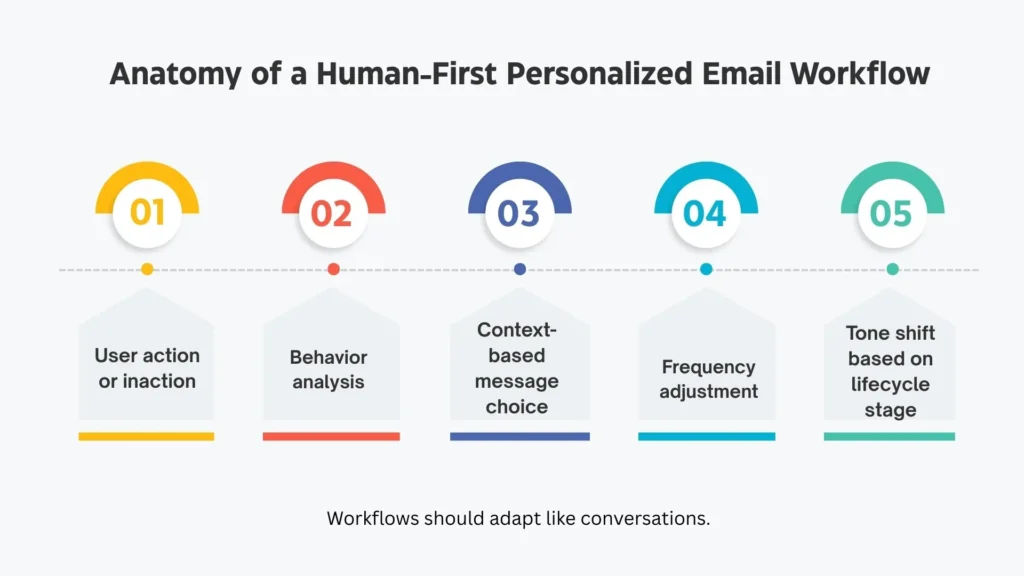
That Feel Human Scalable personalization lives inside well-designed personalized email workflows. The key is pacing and restraint. Human conversations don’t fire five messages in three days. They respond, pause, and adjust.
Strong workflows:
- React to silence as much as engagement
- Adapt frequency based on behavior
- Change tone as commitment increases
For example:
- Curious browsers get educational language
- Repeat buyers get familiarity
- High-value customers get direct, respectful communication
That’s personalization with emotional awareness, not just logic.
Post-Purchase Is Where Most Brands Break Trust
The sale isn’t the end of personalization. It’s where expectations rise. Post-purchase email personalization is often ignored or over-automated.
- People don’t want:
- Generic thank-you emails
- Repetitive cross-sell pushes
They want:
- Guidance
- Validation
- Reassurance they made the right choice
Scaling this means using behavior again:
- How fast they opened the product
- Whether they revisited help pages
- If usage dropped suddenly
Personalization here feels human because it anticipates needs instead of pushing offers.
Human Tone Is a System, Not a Writing Style
Many teams try to fix robotic emails by writing better copy. That helps, but it’s not enough. Human tone comes from:
- Consistent voice rules
- Context-aware templates
- Clear constraints on automation
For example:
- Fewer variables per email
- One core message per send
- Copy that assumes intelligence, not ignorance
This is where experienced email marketing services stand apart from DIY automation setups. They design systems where tone survives scale.
Why Scaling Personalization Is Easier With the Right Partner
As lists grow, complexity multiplies. That’s why brands turn to an email marketing agency not just to execute campaigns, but to design the underlying architecture that makes personalization scalable and human.
Strong agencies go beyond building workflows or plugging in tools. They map customer journeys, understand emotional states, and align every email with real business intent. This becomes even more critical for brands working with email marketing agencies in India, where audiences are diverse, multilingual, and behavior shifts significantly by region, device, and usage patterns. At that scale, context isn’t a nice-to-have. It’s everything.
Scaling Without Losing the Human Touch Comes Down to Three Principles
- Relevance beats complexity – More data doesn’t mean better emails. Better interpretation does.
- Automation supports judgment, not replaces it – Systems should amplify human thinking, not bypass it.
- Respect is the ultimate personalization – Frequency control, tone, and timing matter more than names and product blocks.
When these principles guide your email personalization, scale becomes an advantage, not a risk.
Where Most Brands Go Wrong (and How to Avoid It)
Common mistakes include:
- Over-personalizing every email
- Triggering messages too aggressively
- Treating engagement as permission for pressure
Smarter personalization:
- Leaves space
- Watches behavior over time
- Lets customers lead the pace
That’s how brands grow lists without burning them.
Scaling personalization isn’t about doing more. It’s about doing fewer things with better judgment.
When data, automation, and empathy work together, emails stop feeling automated and start feeling intentional again.
FAQ’s
It means delivering relevant, personalized emails to a growing audience using data and automation, without losing tone, timing, or trust.
Yes. When personalization is based on behavior and context, not just name tags or static segments, emails stay natural even at high volumes.
Behavioral data like browsing activity, purchase history, engagement patterns, and timing matter more than demographic data alone.
Segmentation groups people. Personalization adapts messages within those groups based on individual actions and intent.
They are automated email sequences that adjust content, timing, and messaging based on user behavior and lifecycle stage.
Over-personalizing everything. Relevance, pacing, and respect matter more than using every available data point.