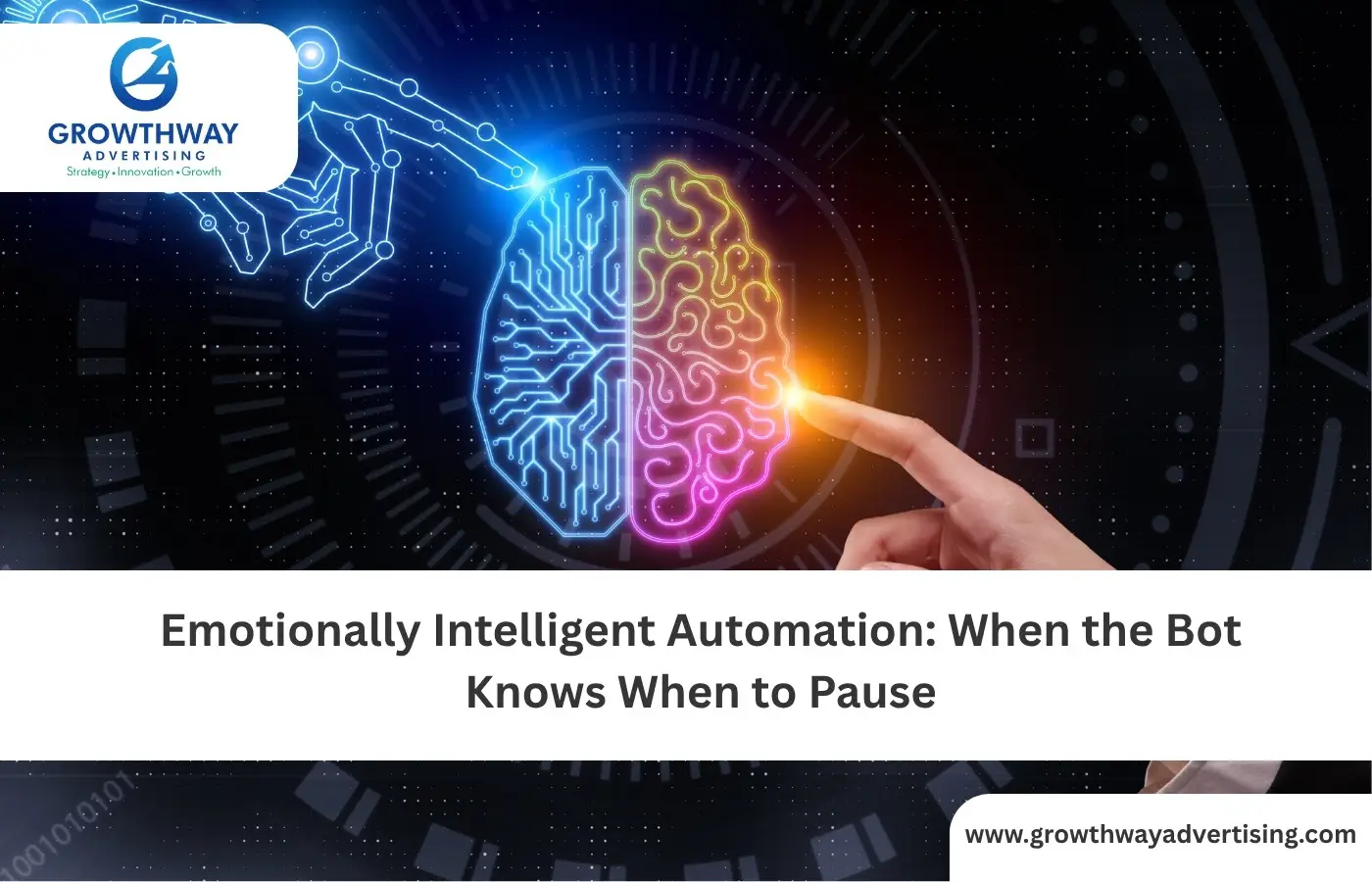
You’ve seen bots that reply instantly, escalate in seconds, or push you through conversion funnels with no room to breathe. But a truly emotionally intelligent automation system does something radically different, it pauses. It senses tension, hesitation, or fatigue and waits, because sometimes the most intelligent move isn’t responding faster, it’s responding right.
When a pause becomes emotional intelligence
Most automation logic is built for speed and completion. Every workflow pushes toward a “next step.” But emotional intelligence isn’t linear. Humans pause when they sense discomfort or confusion. We let silence communicate empathy. That same principle can now guide bots, powered by emotion recognition technology and emotional intelligence algorithms that measure tone, sentiment, and pacing to decide when to wait.
Here’s what that looks like in automation logic:
- A chatbot detects rising frustration and pauses before replying.
- An email engine holds a follow-up when user sentiment turns negative.
- A service bot delays escalation if the emotion signal is mixed.
- A sales automation pauses retargeting if the user shows hesitation signals.

This micro-pause a second, or a few gives users a sense of respect and choice. It transforms automation from reactive to reflective. That’s what separates human-centered automation from the old “speed-first” mindset.
What most people get right and what they miss
Many discussions about emotionally intelligent systems revolve around detecting how machines identify human emotions. That’s important. But the deeper, underexplored question is what happens next.
Understanding emotion is only half the equation. Responding appropriately is where emotional intelligence actually shows up. That’s why “pause logic” matters, it’s empathy turned into action.
Most brands automate for efficiency. The next generation automates for connection. That’s where empathic AI systems come in software that reads context, interprets nuance, and chooses a slower, more considerate path when the situation calls for it.
But to reach that point, automation must evolve in three major ways:
- From detection to discretion.
Recognizing emotion is step one. Knowing when not to respond is step two. - From reply speed to emotional timing.
A one-second delay can change whether a user feels heard or handled. - From task completion to relationship maintenance.
Emotional automation prioritizes user comfort over short-term metrics.
The mechanics behind emotionally aware automation
Let’s break down how emotionally intelligent automation systems actually decide to pause.

1. Emotion detection and confidence scoring
A bot powered by emotion recognition technology analyzes words, voice, or facial cues to gauge sentiment. The system assigns confidence levels to each signal. If the model isn’t sure whether the user is angry, sarcastic, or joking, it triggers a pause state instead of replying blindly.
2. Adaptive response flow
An AI empathy model decides between three modes: respond, pause, or escalate.
- Respond when emotion is clear and stable.
- Pause when emotion is mixed, unclear, or volatile.
- Escalate when distress exceeds a certain threshold.
3. Contextual memory
The system remembers emotional trends. If a user’s tone improves over time, the bot shortens future pauses. If frustration repeats, it learns to wait longer or route earlier to a human. This long-term tracking turns one-off reactions into ongoing empathy.
4. Transparency in silence
A good pause doesn’t feel like a glitch. It feels intentional. Phrases like “Give me a second to review that” or “Let me think on that for a moment” make silence feel thoughtful. That language design is as vital as the algorithm itself.
5. Human fallback
Customer service automation still needs a safety net. When a pause fails to calm the situation, escalation to a human should be instant. Empathy doesn’t mean endless waiting; it means understanding when a person must take over.
Real-world cues that drive the pause
Emotionally intelligent bots rely on micro-signals that humans often process subconsciously. Here are examples of triggers that make the system wait:
- Negative sentiment spikes — words like “upset,” “annoyed,” or “disappointed.”
- Ambiguous replies — short, uncertain phrases like “maybe,” “whatever,” “I guess.”
- Sudden drop in engagement — user stops typing or viewing content mid-interaction.
- Contradictory tone — positive language mixed with negative punctuation or pacing.
- High message frequency — multiple short messages in a few seconds often signal agitation.
Pausing at these points prevents over-automation. It gives users time to self-regulate, a small but powerful act of digital empathy.
Building emotional restraint into automation
If you offer automated marketing services, or work with a marketing automation company, you know timing is everything. A pause in automation can increase open rates, improve satisfaction, and even prevent unsubscribes. Here’s how to integrate emotional restraint into your systems.
- Incorporate emotional confidence scores in your marketing triggers. Don’t send a follow-up email if sentiment around the brand just dropped.
- Train bots with conversation datasets that include emotionally complex interactions.
- Use emotion decay functions, if sentiment hasn’t stabilized, delay the next touchpoint.
- Integrate emotion variables into personalization logic, not just demographics or behavior.
- Run A/B tests on pause timing. See how response delays affect trust and conversions.
By embedding these features into your marketing automation services, you shift from transactional communication to adaptive engagement.
Emotionally intelligent marketing: more human than ever
Marketing often treats automation as a numbers game. But consider how many customers unsubscribe because a bot “didn’t get the tone.” Emotional sensitivity is now measurable, and it’s becoming a differentiator.
A marketing automation consultation that includes emotion detection and pause modeling can redefine brand tone. When your campaigns know when to speak and when to wait, they start to feel human.
That’s why leading systems now blend emotional intelligence algorithms with behavior tracking. They assess sentiment shifts, engagement delays, even typing speed subtle clues that indicate emotional readiness.
When combined with AI empathy models, your automation starts behaving like a thoughtful assistant: fast when needed, patient when appropriate.

The unseen value of silence
Silence in automation isn’t an error; it’s a strategy. Every pause communicates intent. In an age of hyper-responsive tech, waiting feels luxurious. A pause signals: you matter enough for me to listen first.
That’s what transforms AI from functional to emotional: the ability to hold space, not just fill it.
For businesses using automated marketing services or customer service automation, this moment of empathy translates directly into loyalty. It lowers friction, improves perception, and builds trust faster than any incentive ever could.
Think of it like this:
- Speed wins conversions.
- Empathy wins relationships.
- Emotionally intelligent automation balances both.
A future where bots feel timing
As empathic AI systems evolve, they’ll become better at reading subtle signals fatigue, uncertainty, sarcasm, humor. With every update, their sense of timing sharpens.
The future of human-centered automation won’t just be faster or more accurate; it will be emotionally literate. Bots will sense hesitation in your tone and hold back. They’ll recognize excitement and accelerate. They’ll pause, not because they’re unsure, but because they care to get it right.
And that pause, that simple, thoughtful silence is what will make automation finally feel human.
FAQ’s
1. How does Emotionally Intelligent Automation differ from regular automation?
Traditional automation focuses on efficiency and speed. Emotionally intelligent automation adds context and empathy allowing bots to recognize emotional cues, pause when needed, and respond with emotional awareness.
2. What role does Emotion Recognition Technology play?
Emotion recognition technology helps AI detect user emotions through text, voice, or facial expressions. This enables customer service automation systems to adjust tone, pace, or even pause to match the user’s emotional state.
3. How does Empathic AI improve customer experience?
Empathic AI systems can sense frustration or satisfaction and respond accordingly. This builds trust, reduces churn, and creates a more human-like experience across automated interactions.
4. Can Emotionally Intelligent Automation help in marketing?
Yes. Many marketing automation companies are integrating emotional data into their systems to personalize campaigns. It helps brands know when to send, pause, or shift messaging for better engagement.
5. What industries benefit most from Emotionally Intelligent Automation?
Sectors like customer service automation, healthcare, and marketing see the biggest impact. Anywhere emotional understanding improves relationships, emotionally intelligent automation can make a measurable difference.
6. How can businesses get started with Emotionally Intelligent Automation?
Start by partnering with a marketing automation company or expert offering marketing automation consultation. They can identify points in your workflow where empathy and timing can enhance engagement.